Studying in Switzerland: a complete guide for francophone families
EPFL, ETH Zurich, luxury hospitality: a world-class university system accessible to French students, but with a cost of living that changes every calculation.
Co-founder, Axiom Academic · Published on 9 April 2026 · Updated 12 June 2026
Country at a glance
- Application platform
- Direct application to each university
- Languages of instruction
- French (Romandy), German (German-speaking Switzerland), Italian (Ticino), English (Master's programmes)
- Average annual cost
- €1,000 to €2,900 (cantonal universities); ~€4,700 at EPFL and ETH Zurich for new foreign students since 2025. Warning: very high cost of living
- Bachelor's duration
- 3 years (Bachelor) / 5 years (engineering Master, medicine)
- Visa required
- No
- Degree recognition
- Strong readability in France and the EU thanks to the Bologna Process and bilateral Swiss-EU agreements. For regulated professions, an ENIC-NARIC procedure may be required.
Switzerland is the most paradoxical destination for a francophone family: tuition fees remain very low relative to academic quality that is among the best in the world (ETH Zurich #7 and EPFL #22 in the QS 2026 ranking), and yet almost nobody thinks of it first. Why? Because the cost of living changes every calculation, because tuition for new foreign students tripled at the autumn 2025 intake at both federal institutes of technology, and because the Swiss system is poorly known in France.
This fact sheet is an honest guide: the strengths are real and exceptional, but so are the constraints.
1. The system in brief
Switzerland has four national languages (German, French, Italian, Romansh) and a federal university system that respects this diversity. There are three types of institutions:
Cantonal universities
10 cantonal universities, including 2 in French-speaking Switzerland (Romandy):
- University of Geneva (UNIGE): 16,000 students, very international, strong in law, international relations, sciences, medicine
- University of Lausanne (UNIL): 17,000 students, stunning lakeside campus, strong in geosciences, social sciences, economics (HEC Lausanne)
In German-speaking Switzerland: Universität Zürich (top 100), Universität Bern, Universität Basel, etc. Courses mainly in German.
Federal Institutes of Technology (EPF)
These are the two jewels of the Swiss system:
- EPFL (École Polytechnique Fédérale de Lausanne): #22 worldwide in the overall QS 2026 ranking and world top 10 in engineering (QS ranking by subject). Campus in French (and increasingly English). It’s the Swiss version of Polytechnique, with an ultramodern campus, cutting-edge research, and one of Europe’s most dynamic startup ecosystems.
- ETH Zurich (Eidgenössische Technische Hochschule): #7 worldwide in the QS 2026 ranking, a top-10 fixture for years. Albert Einstein’s university. Courses mainly in German at Bachelor level, massively English at Master level. Engineering, sciences, computer science, architecture.
Universities of Applied Sciences (HES)
Swiss equivalent of Belgian hautes écoles or French engineering schools. More practice-oriented, 3-4 year cycle. Examples: EHL (École hôtelière de Lausanne), ranked #1 worldwide in hospitality management, and several HES in design, health, social work.
2. Why Switzerland deserves attention
a. EPFL: French-language engineering excellence
EPFL is probably the best-kept secret of francophone higher education. Note however the major change of the autumn 2025 intake: following a decision by the ETH Board (December 2024), new foreign students who move to Switzerland for their studies now pay 2,190 CHF/semester, i.e. 4,380 CHF/year (€4,700/year), triple the previous rate (~730 CHF/semester, which students enrolled before autumn 2025 keep). Even at this new rate, a Bachelor’s in engineering at EPFL leads to a top-25 world-ranked degree for a fraction of the international fees of a prestige equivalent in the UK or the US.
Admission to EPFL is direct with the French Bac (mention bien generally required, sometimes mention assez bien with a very strong science profile). No entrance exam, no prépa. The student enters directly in year one. Important nuance for ETH Zurich: French Bac holders must pass an entrance examination (Aufnahmeprüfung, also called the “Ergänzungsprüfung”) to be admitted; admission is not automatic. However, year one is a severe filter: roughly 40-50% pass rate on first attempt. Selection happens during the course, not at entry.
b. Tuition fees are still low, but have tripled at the federal institutes for foreigners
| University | Annual fees 2025-2026 (CHF) | EUR equivalent |
|---|---|---|
| EPFL / ETH Zurich: new foreign students (since autumn 2025) | ~4,380 CHF | ~€4,700 |
| EPFL / ETH Zurich: Swiss students, residents, or enrolled before 2025 | ~1,460 CHF | ~€1,550 |
| UNIL (Lausanne) | ~1,160 CHF | ~€1,200 |
| UNIGE (Geneva) | ~1,000 CHF | ~€1,050 |
| EHL (private) | ~45,000 CHF | ~€47,000 |
| German-speaking cantonal universities | ~1,600-2,800 CHF | ~€1,650-2,900 |
Excluding EHL (a special case in the luxury segment), cantonal universities cost between €1,000 and €2,900 per year for all students. The two federal institutes of technology cost ~€4,700 per year for a new French student (rate in force since autumn 2025, indexed to inflation every 4 years). The former are comparable to French public engineering schools, and the latter remain 5 to 10 times cheaper than the UK or USA.
c. Quality is objectively world-class
| University | QS Ranking 2026 |
|---|---|
| ETH Zurich | #7 |
| EPFL | #22 |
The cantonal universities hold their own too: Zurich, Geneva and Lausanne regularly rank between the world top 100 and top 200. One university in the top 10 and one in the top 25: for a country of 8.7 million people, that’s extraordinary. Even after the 2025 increase, the quality-to-price ratio remains among the best in the world for a French student.
3. Cost of living: the cold shower
This is the point that changes everything. Switzerland is the most expensive country in Europe for daily life. A student in Lausanne or Geneva must budget:
| Item | Monthly (CHF) | Monthly (EUR) |
|---|---|---|
| Housing (shared room) | 700-1,100 | 720-1,130 |
| Food | 400-600 | 410-620 |
| Health insurance (LAMal, mandatory) | 80-120 (student rate) | 85-125 |
| Transport | 70-100 (SBB half-fare) | 72-103 |
| Leisure, misc | 150-300 | 155-310 |
| TOTAL monthly | 1,400-2,220 CHF | 1,440-2,285 € |
| TOTAL yearly (12 months) | 16,800-26,640 CHF | 17,300-27,400 € |
Important: students in Switzerland pay Swiss health insurance (LAMal), which is mandatory. A reduced student rate exists, but it’s an extra cost that students in France or Belgium don’t face. EU students may exercise a right of exemption (droit d’option) allowing them to remain on their home-country health insurance (e.g. French Social Security or a European EHIC) instead of subscribing to LAMal, which can significantly reduce costs.
Bottom line: including tuition at the 2025 “new foreign students” rate, a year at EPFL costs roughly €22,000 to €32,000 all-in. That’s the equivalent of the international tuition fees alone at a major UK university, housing and living costs not included.
4. Admission for a French student
At EPFL and ETH Zurich
- French Bac required, with a minimum distinction (often mention bien for EPFL, mention très bien recommended for ETH Zurich)
- No entrance exam or interview: admission is on file
- No IELTS for Bachelor programmes (EPFL teaches in French; ETH teaches in German at Bachelor level, requiring a C1 German certificate for non-German speakers. English is predominantly for Master’s programmes)
- Year one is a filter: roughly 40-50% pass rate on first attempt at EPFL, and resits are limited
At cantonal universities (UNIGE, UNIL…)
- French Bac sufficient for non-contingented fields
- Medicine: mandatory aptitude test (AMS), similar to the Belgian system
- Direct registration, usually before end of April/May for the following year
5. Who is Switzerland right for?
In our experience, it’s the right choice for families whose child:
- Targets excellence in engineering or science and wants a top-25 degree (top 10 in engineering) without going through a French prépa: EPFL is the best shortcut that exists
- Has an excellent science transcript (mention bien or très bien at the Bac, strong maths and physics) and is ready to face a selective first year
- Has a comfortable budget (~€22,000-32,000/year all-in) or is willing to work part-time (Switzerland allows student work for EU students up to 15 hours/week during term, well-paid at ~20-25 CHF/hour)
- Appreciates the Swiss quality of life (safety, cleanliness, nature) and can handle the cost
- Targets luxury hospitality: EHL is the mandatory passage
Conversely, it’s not the right destination for:
- A student on a tight budget with no supplemental income: the cost of living is too high
- An average student hoping for easy entry: EPFL lets you in but eliminates during the year
- A student wanting to practice French law, French medicine, or any French-regulated profession: reconversion is possible but not automatic
6. Standard timeline for a September 2027 intake
| Period | Step |
|---|---|
| Autumn 2026 | Identify target universities + verify prerequisites (Bac distinction, file) |
| December 2026-March 2027 | Apply to EPFL / ETH / cantonal universities (variable dates) |
| April 2027 | Deadline for UNIL / UNIGE for foreign students |
| May-June 2027 | Admission results + AMS test if medicine |
| July 2027 | Bac results → admission confirmation |
| August 2027 | Housing + LAMal registration + Swiss bank account |
| September 2027 | Start of term |
Key takeaways
- ETH Zurich ranks #7 worldwide and EPFL #22 (QS 2026). For new foreign students, their tuition tripled at the autumn 2025 intake: plan for ~€4,700/year, which remains very competitive.
- The cost of living in Switzerland is the highest in Europe: plan for €22,000-32,000 per year all-in in Lausanne.
- Admission to EPFL is without entrance exam or prépa for a French student with a good Bac, but year one is a severe filter (~50% pass rate).
- No visa for French nationals (bilateral Switzerland-EU agreements), but a student residence permit (permit B) must be obtained after arrival. Degrees benefit from strong readability in France and the EU.
- The quality-to-price ratio remains among the best in the world if you can afford the cost of living.
- EHL (hospitality) is a special case: world #1 but €47,000/year, a niche investment.
Going further
- EPFL: Bachelor admission criteria and application
- ETH Zurich: studies for international students
- University of Geneva: admission
- University of Lausanne: matriculation and registration
- Swissuniversities: Swiss universities portal
Fact sheet written by Constantin Mardoukhaev, co-founder of Axiom Academic. Constantin supports francophone families with their international study projects, with particular attention to destinations offering strong quality-to-price ratios.
Frequently asked questions
How much does studying in Switzerland cost for a French student?
Is admission to EPFL difficult for a French Bac holder?
Do you need a visa to study in Switzerland?
Are Swiss universities well ranked?
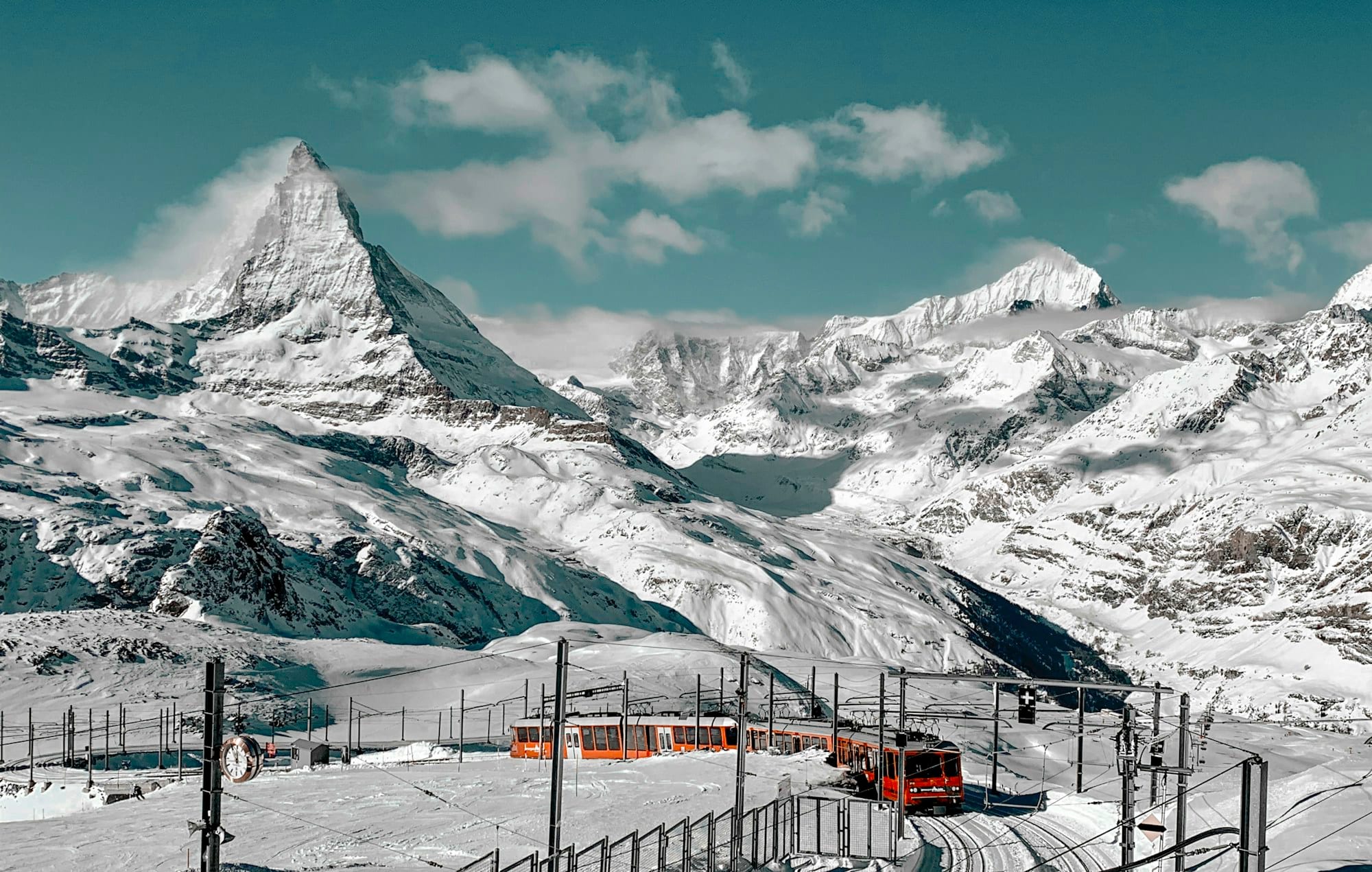
Photo credits: Victor He · Unsplash · source